
How to Study a Celebrity Style Icon Without Copying the Outfit
A photograph can make a celebrity’s style seem to rest on one perfect outfit. A more useful study looks for choices that recur across different years and…
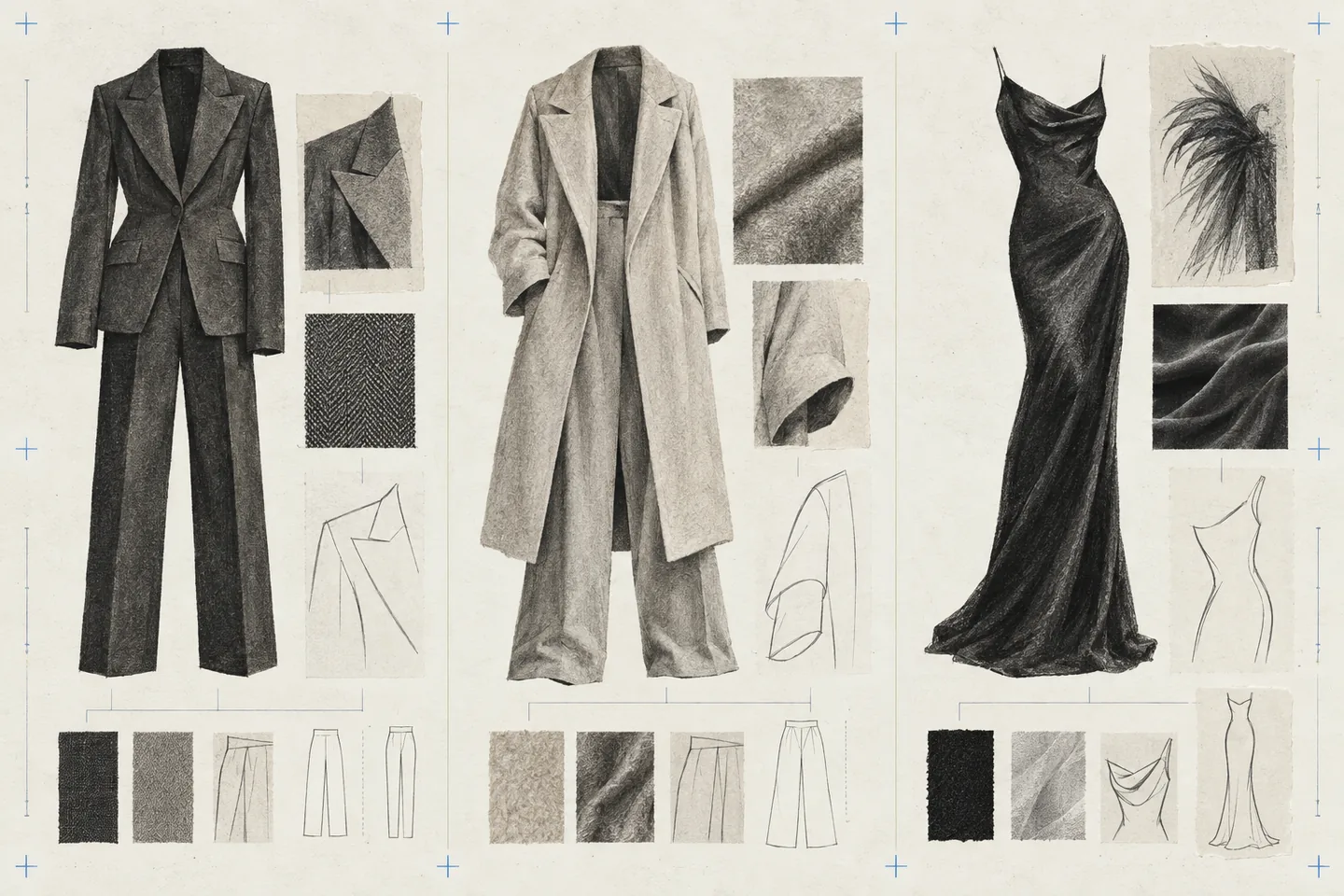
A photograph can make a celebrity’s style seem to rest on one perfect outfit. A more useful study looks for choices that recur across different years and settings. Which shapes appear more than once? How does the person use colour, texture and accessories? Which garments belong to a role or a formal occasion rather than an everyday wardrobe? The aim is to describe a pattern you can see, while leaving room for exceptions.
Lauren Bacall offers a well-documented example. The Museum at FIT’s exhibition Lauren Bacall: The Look drew on garments and accessories she donated between 1968 and 1986, presenting selected pieces alongside photographs, magazine features and archival footage. Those different records help us compare what a garment is with how it appeared in public. They also show why one familiar image cannot stand for a whole wardrobe.
Choose evidence from more than one setting
Start with a small, varied set of examples: an informal outfit, a tailored ensemble and something worn for an evening event. Include a screen or stage costume only if you label it as such. A costume was made to serve a character and a production, even when it resembles the wearer’s personal style. A studio portrait has limits too: lighting, cropping and pose can hide construction, movement and accessories.
For each example, record its date or approximate date, setting and source. Write “unknown” when a detail is not documented. A museum description may identify a designer or fabric, while a photograph can show how an outfit sat on the body. Neither record proves how often its wearer chose that look. Repetition across several documented examples is stronger evidence than the fame of any single photograph.
Compare like with like before drawing conclusions. An evening dress and a day suit answer different practical needs; a garment from the 1940s and one from the 1970s reflect different fashions. Ask whether a feature persists despite those changes. The Museum at FIT contrasts Bacall’s sharply tailored 1940s pantsuits with an Emanuel Ungaro trouser ensemble from around 1973 whose fit is easier. The garments are not identical, but both provide evidence for an interest in trouser-based, menswear-inspired dressing.
Make a simple reference grid
A reference grid can be a notebook page. Give each outfit a row and note four things: silhouette, surface, accessories and occasion. Keep observations short enough to compare across rows. “Long close line; feather trim; evening dress” is more useful than “glamorous”. Where an image hides the shoes or the record omits an occasion, leave the cell blank rather than guessing.
Four pieces from Bacall’s exhibition show how varied the evidence can be:
- Ungaro trouser ensemble, around 1973: a relaxed fit in silk damask. Compare its ease with the sharper line of the earlier pantsuits.
- Christian Dior evening dress, autumn 1968: an elongated, close-fitting line with ostrich feathers that add movement. Notice how the trim changes a restrained outline.
- Norman Norell coat and dress, around 1956: a camel coat conceals a sequinned lining and matching sheath. Study the effect of an outer layer before describing the dress alone.
- Yves Saint Laurent evening ensemble, autumn 1969: a beaded camisole tunic and shorts form an unusual formal silhouette. Ask whether it represents a recurring choice or a distinct occasion.
Do not force every row to prove the same point. The relaxed trousers, feathers, concealed sequins and shorts resist a single neat adjective. That variety makes the grid valuable: it shows both the tendencies and their limits. The museum places the Saint Laurent ensemble at an after-party for Applause, a context worth recording before turning that outfit into a general rule.
Compare relationships, not just garments
Look across the grid one feature at a time. Where is the outline firm, and where does it allow ease? Does a coat create a composed exterior around something more decorative? Does texture carry the visual emphasis while the shape remains plain? These questions reveal decisions that can recur even when designers, materials and decades change.
Then examine accessories in relation to the clothes. A belt can define the waist; a hat can extend the outline; jewellery can draw attention to the face. An accessory that appears in one photograph may be essential to that outfit, but it is not necessarily a signature. Check other images and object records before describing a repeated habit. A portrait cropped at the shoulders tells you nothing reliable about shoes.
Setting changes the reading too. The Norell coat and dress have a sequence: a subdued outer surface gives way to sequins. That relationship is more precise than calling the outfit simply restrained or lavish. The Saint Laurent ensemble, by contrast, is an evening choice with a striking outline. Keeping its occasion attached prevents a memorable exception from swallowing the broader pattern.
Separate description from interpretation
The museum’s Bacall gallery guide describes her taste as practical and tailored, with confidence and wit taking precedence over excessive embellishment. Treat that as a curator’s interpretation to test against the objects. The feathered Dior dress and sequinned Norell ensemble show that practical tailoring did not exclude decorative effects. A better question is where each effect sits and what the rest of the outfit does around it.
In your own notes, distinguish what a source documents from what you infer. “The ensemble dates to around 1973” reports a record. “Its softer line continues an interest in tailoring” is an interpretation based on comparison. Both can be useful, but the reader should be able to tell them apart. Avoid assigning motives or personality from clothes alone: an outfit cannot prove what its wearer felt about it.
Use physical descriptions before broad style words. “A close-fitting dress with feather trim” identifies something visible. “A camel coat opening onto sequins” describes a visual change. Words such as elegant, confident or daring are less useful unless you explain the garment feature and setting that led you to them. This discipline also helps when two people use the same designer in different ways.
Turn the pattern into a useful observation
Try writing one sentence that accounts for most of your examples without pretending to explain all of them. For Bacall, you might observe a recurring interest in a clear, tailored line that could accommodate softness, movement or shine. Check that statement against the easy Ungaro trousers, feathered Dior dress and unusual Saint Laurent evening set. If an example does not fit, say so and ask whether your description needs changing.
That sentence is a tool for looking, not an outfit prescription. To apply the method to another figure, repeat the same steps with documented examples: identify the context, record what is visible, compare several occasions and name the exceptions. You may discover that a supposed signature belongs chiefly to a film role or a period of fashion photography. You may also find that a familiar silhouette survives many changes in fabric and styling.
Finally, respect the gaps in the record. Preserved garments and published images are selections, not an inventory of every ordinary day or rejected choice. A sound account of a style icon describes what the surviving evidence supports. It tells the reader how proportion, material and occasion work together, and where the evidence stops.