
Celebrity Styling
By Marisol Vega
Celebrity styling is the planning behind clothing and grooming for public appearances. It is less about choosing the most dramatic garment than creating a
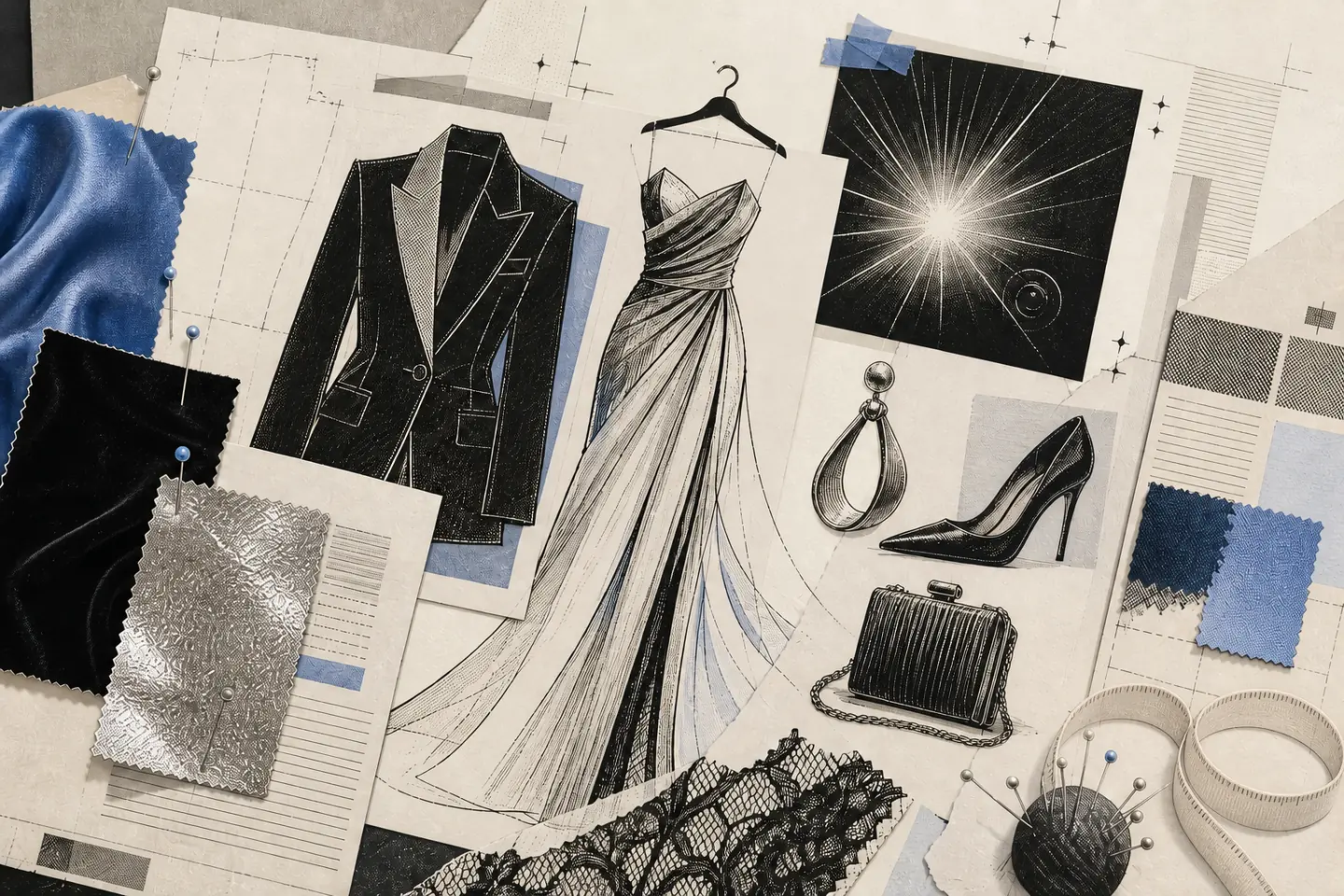
Celebrity styling is the planning behind clothing and grooming for public appearances. It is less about choosing the most dramatic garment than creating a coherent look that suits the person, occasion and camera conditions. A successful outfit should communicate clearly from several angles, remain comfortable through the event and feel consistent with the wearer’s established style.
The same principles are useful outside celebrity culture. Fit, proportion, colour and preparation matter whenever clothing must work in photographs, formal settings or a long day of public activity.
Start with a Clear Brief
Before sourcing clothes, the stylist defines what the appearance requires. The venue, dress code, time of day, weather, schedule and likely camera setup all affect the choice. A seated interview needs different freedom of movement from a stage appearance. An outdoor arrival may require practical outerwear, while a formal evening event calls for a more controlled silhouette.
The brief should also identify the intended mood in plain terms, such as restrained, energetic, formal or relaxed. Two or three reference images can clarify shape and colour, but they should guide the work rather than encourage imitation. The aim is to produce a look suited to the wearer, not a copy of someone else’s outfit.
Useful questions at this stage include:
- What movements will the wearer need to make?
- Which parts of the outfit will appear in close-up?
- Will the person be standing, seated or moving between both?
- Are there cultural, ceremonial or professional expectations to respect?
- What backup is needed if the weather or schedule changes?
Build the Outfit Around Fit and Proportion
Silhouette is the first thing viewers read. A long, clean line can create formality, while a cropped jacket and higher waist can give a sharper division between the upper and lower body. Volume works best when it has a clear location. Full sleeves, a broad shoulder or a wide skirt can provide focus, but combining all three may obscure the wearer.
Fit must be checked in motion, not only in front of a mirror. The wearer should walk, sit, turn, raise both arms and use stairs if the event includes them. A jacket that looks precise while standing may pull when seated. A hem that works in still photographs may catch under a shoe when walking.
During a fitting, check:
- shoulder seams, lapels and necklines for pulling or gaping;
- sleeves and trouser hems at their intended final length;
- closures, pockets and vents in standing and seated positions;
- the line of the garment from front, side and back;
- whether underlayers create visible edges or unwanted bulk.
Tailoring should correct the garment without restricting the person. Comfort affects posture, expression and confidence, so it is a practical part of the visual result rather than an indulgence.
Choose Colour, Fabric and Texture for the Setting
Colour should be considered against the background, lighting and wearer’s complexion. Strong contrast may help a person stand out against a busy arrival area; a quieter palette can place more emphasis on shape and construction. Repeating one colour in a small accessory can create cohesion, but exact matching is not necessary.
Fabric changes under different light. Satin and metallic surfaces can produce bright highlights, velvet absorbs light, and fine repeated patterns may appear to shimmer on video. Very pale fabric can lose detail under strong illumination, while deep dark shades may hide construction unless the texture provides contrast. Test uncertain materials with ordinary photographs, flash and short video rather than relying on the fitting-room mirror.
Performance matters too. Consider wrinkling, transparency, weight, static, sound and how the material reacts to heat. A beautiful fabric that creases during travel or becomes transparent under flash can undermine an otherwise careful look. Steam, press and inspect each garment before departure.
Use Accessories to Direct Attention
Accessories should support a focal point rather than compete to become one. Jewellery near the face draws attention upwards; a belt defines the waist; a distinctive shoe changes the line of trousers or a skirt. The scale of each piece should relate to the garment. Detailed clothing usually needs simpler additions, while clean tailoring can carry a stronger cuff, brooch or earring.
Neckline and jewellery need to be assessed together. A high or decorated neckline may work best without a necklace, whereas an open neckline can accommodate one clear piece. Metals do not have to match exactly, but repeated finishes should look deliberate. Check that necklaces stay centred, earrings do not catch on clothing and rings do not snag delicate fabric.
Shoes determine stance and pace. Test them on a surface similar to the venue and confirm that the wearer can walk, pause and turn safely. If a bag is required, it should be easy to hold without blocking important garment details in photographs.
Coordinate Hair, Makeup and Grooming
Hair and makeup should share the same visual direction as the clothing. A structured outfit can be softened with natural texture or reinforced with a precise hairstyle. An ornate garment may need restrained makeup, while simple clothing can support a more defined lip or eye. These are options, not rules; the deciding factor is whether the elements read as one considered look.
Camera testing is essential. Products and colours can look different under flash or strong panels, so take photographs from close and medium distances. Check shine, uneven colour, loose hair, visible product residue and any transfer onto the garment. Grooming should also cover nails, brows and facial hair where relevant, because hands and faces often appear in close-up.
Allow enough time for changes without rushing. The clothing should be put on in an order that protects both the garment and the finished hair or makeup. A clean robe, face covering or other simple barrier can prevent marks while changing.
Create a Recognisable Personal Style
A public style becomes recognisable through repetition with variation. The team might return to a particular proportion, limited colour family, type of tailoring or approach to grooming. These recurring choices form a visual vocabulary, but they should be flexible enough for different settings.
It helps to divide styling choices into three groups:
- Core: shapes, colours and details that consistently suit the wearer.
- Flexible: fabrics, layers and accessories that change with the season or occasion.
- Experimental: one unfamiliar element that adds interest without overwhelming the look.
This framework allows trends to enter selectively. A current shape can be introduced in a familiar colour, or an unusual material can be balanced by an established silhouette. If every element changes at once, the person may appear dressed as a concept rather than recognisably themselves.
Prepare for the Event
Good preparation prevents small problems from becoming visible. Photograph the complete outfit during the final fitting and record which accessories, underlayers and shoes belong with it. On the day, inspect closures and hems, remove lint, empty bulky pockets and check that labels or temporary stitching are not visible.
A compact emergency kit may contain:
- a small sewing kit and spare fastenings;
- fashion tape, safety pins and stain treatment;
- a lint roller or clothing brush;
- blotting papers, a comb and essential touch-up items;
- comfortable backup footwear where the schedule permits.
Someone should know how each item is meant to sit, especially if the stylist cannot remain nearby. Before the appearance, check the outfit under the available light and take front, side and seated photographs. Confirm that pockets lie flat, jewellery remains aligned and no underlayer shows unexpectedly.
Handle Cultural References with Care
Traditional textiles, ceremonial clothing and regional motifs require more than visual appreciation. Research their meaning, proper use and source before including them. Credit the relevant craft or tradition accurately where public information accompanies the look. Avoid treating sacred, restricted or identity-specific elements as decorative novelties.
When uncertain, seek informed guidance or choose a different reference. Respectful styling makes context visible instead of stripping an element down to an unexplained pattern.
Assess the Complete Look
The final review should be practical. Does the outfit suit the occasion? Can the wearer move and sit comfortably? Is there one clear visual emphasis? Do the clothes, accessories and grooming support the same direction? Does the look remain coherent from the front, side and back?
Remove anything that answers none of those needs. Celebrity styling is often most effective when the planning is invisible: the wearer looks recognisable, the clothing behaves properly and every detail appears to belong.
Carry this on with the MiraAI colour-analysis app.