
Red-Carpet Dress Codes: Theme, Invitation and Venue Rules
A red-carpet invitation can contain several different kinds of instruction. A theme may suggest a visual direction. A dress code may specify the level of…
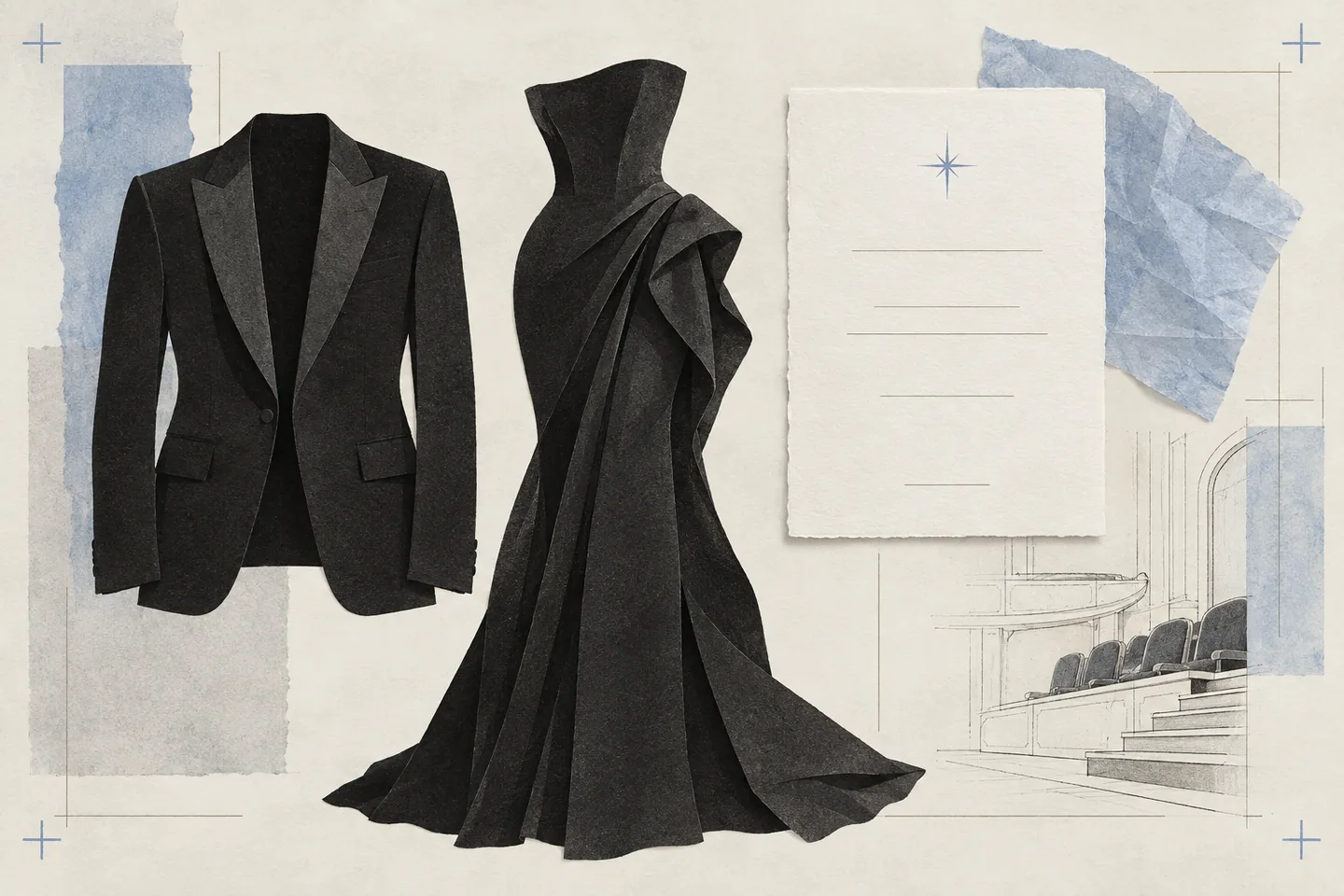
A red-carpet invitation can contain several different kinds of instruction. A theme may suggest a visual direction. A dress code may specify the level of formality. A ticket may determine which entrance and screening a guest can use. Venue rules may limit shoes, bags or the size of an outfit. Reading all of these as a single request to “dress for the theme” can produce a striking look that fails the practical brief.
Theme and dress code answer different questions
An exhibition title describes the subject of a show; it is not automatically the wording on a gala invitation. In 2025, The Metropolitan Museum of Art named its Costume Institute exhibition Superfine: Tailoring Black Style and separately announced “Tailored for You” as the gala dress code. The museum described that code as guidance inspired by the exhibition’s focus on suiting and menswear, with room for creative interpretation. A stylist could draw on the exhibition’s ideas, but should begin with the code the organiser actually issued. The Met’s 2025 announcement makes the distinction explicit.
The distinction also prevents last year’s brief from becoming this year’s assumed rule. For the 2024 benefit, the exhibition was Sleeping Beauties: Reawakening Fashion, while the announced dress code was “The Garden of Time.” The Met’s 2024 announcement identifies both. Neither that code nor the 2025 code should be presented as a standing Met Gala requirement.
A theme can be interpreted through silhouette, material, colour or detail. A dress requirement has a different function: it tells guests what form of clothing the organiser expects. Sometimes the two are closely related, as they were in those Met announcements. Even then, an interpretation should be checked against the invitation and any instructions sent to the guest’s team. A press headline, a photograph from a previous year and the current invitation are not interchangeable documents.
A working taxonomy of red-carpet rules
A red-carpet brief may contain separate rules for attire, access and the venue. Check each against the guest’s documents.
Attire requirement
This specifies formality or acceptable clothing. The Festival de Cannes, for example, says evening wear is required for gala screenings at the Grand Théâtre Lumière and lists alternatives including a cocktail dress, a dark-coloured pantsuit, a dressy top with black trousers, and specified suits. The same Festival FAQ says proper attire is sufficient for other screenings. “Going to Cannes” is therefore too broad a brief; the screening and venue determine which instruction applies.
Access condition
A suitable outfit does not establish admission. At Cannes, the FAQ discusses badges and tickets for Official Selection screenings and directs ticket holders to observe the arrival time shown on their ticket. It also explains that the gala red-carpet ceremony is primarily intended for the film’s artistic team. A stylist should establish the guest’s actual access and arrival route before designing around a photographed entrance.
Item and silhouette restrictions
Some rules concern individual components rather than the overall level of dress. Cannes’ FAQ excludes sneakers from its listed gala footwear options and prohibits tote bags, backpacks and large bags during gala screenings. It also prohibits nudity in Festival areas and outfits whose volume, particularly a large train, obstructs guest movement or theatre seating. These are Cannes-specific published rules, not a universal standard for red carpets. They make a useful case study in why shoes, bag and garment dimensions belong in the compliance check.
Movement, seating and timing
A look must work along the route it will actually travel. Cannes links its limits on voluminous outfits to circulation and seating, and its FAQ warns that security checks can affect access times. It also tells guests to follow the arrival time on their ticket. Those details turn “Can the wearer stand for photographs?” into more exact questions: Can they move with the crowd, take their seat and arrive in the required window?
Read the documents in the right order
Begin with the invitation, ticket and any instructions supplied directly to the guest or their representative. Confirm the event name, date, role and destination within the venue. Then check the organiser’s published guidance for that event and year. If two documents appear to differ, note their dates and intended audiences before relying on either. A general festival FAQ, a gala invitation and an instruction for a film team may serve different people.
Keep a short record of the exact language. Write “evening wear required for the named gala screening” if that is what the applicable instruction says, rather than reducing it to “Cannes is black tie.” The shorter phrase may sound convenient, but it loses the screening-specific condition and the alternatives the Festival lists. Likewise, record “Tailored for You” as the 2025 Met Gala code rather than relabelling the exhibition title as the code.
Where a restriction is unclear, turn it into a question for the event contact. Does an accessory count as a large bag? Is a train manageable within the venue’s circulation rules? Which route will the guest use? Do not infer permission from another attendee’s photograph. An image shows that a look appeared; it does not explain the instructions, access category or decisions behind it.
The stylist’s event brief
A useful event brief is short enough for the team to consult during a fitting, but specific enough to prevent a late change of direction. It should include these six checks:
- Access: What does the guest’s invitation or ticket permit? Is the red-carpet arrival part of their route, and are there separate instructions for their role? Record the source of that information rather than assuming every attendee follows the same path.
- Venue: Name the screening room or event space. Attach the relevant dress guidance and flag any restrictions on shoes, bags, coverage or outfit volume. Check whether the outfit must pass through security or be worn in more than one space.
- Movement: Map the likely sequence from arrival to entrance. Test the look while walking, turning and using stairs if the route includes them. Assess whether a train, overskirt or carried accessory needs help and whether that help can accompany the guest.
- Seating: Check the look in a chair. Can the wearer sit without blocking adjacent space, damaging the garment or needing a prolonged adjustment? If the event includes a screening, this test matters as much as a standing photograph.
- Timing: Record the arrival instruction shown on the guest’s documents. Allow for dressing, travel, security and any change between arrival and the main event. Give the team a decision point for switching to a tested alternative if a complex look cannot be made ready in time.
- Credits: Confirm the names and descriptions of the people and pieces the team intends to credit. Decide who will supply that information to press or event staff, and verify it before release. This is a team task to establish for each assignment, not a claim that either example event imposes a particular credit format.
Keep the organiser’s requirements beside the look sheet. A note such as “formal” is too vague to resolve a disagreement about footwear or a bag at the final fitting. Exact wording lets the team change one element without abandoning the creative direction.
Build within the boundary
External rules can sharpen a design. If an event allows interpretive freedom, choose the part of the prompt the wearer can express convincingly, then develop the outfit within the verified attire and venue limits. At the 2025 Met Gala, the museum’s stated link between “Tailored for You” and suiting offered a direction; it did not prescribe one identical silhouette for every guest. At a Cannes gala screening, the published attire options and restrictions make the test more concrete: a dramatic garment still has to satisfy the applicable rules for entry, movement and seating.
For a retail comparison after reading the invitation, browse www.hersecret.fi and assess each dress against the event, venue and fit you need. The Finnish-language shop is a clothing reference, not an authority on the event organizer’s dress code.